Love this? Save it for later!
Share the inspiration with your friends
“You have to try this,” my friend texted me one Friday evening, accompanied by a photo of a colorful plate brimming with roasted veggies, olives, and a generous drizzle of olive oil. I was skeptical—Mediterranean diet dinners sounded healthy, sure, but were they actually satisfying after a long day? That night, with a fridge half-empty and my energy low, I decided to give it a whirl. Honestly, it was one of those rare meals that felt both nourishing and like a little celebration on a plate. The way the herbs mingled with fresh lemon juice and tangy feta was unexpected, and the simplicity made it easy to whip up even with my chaotic schedule. Since then, I’ve found myself reaching for these healthy Mediterranean diet dinners almost every night, tweaking them here and there but always coming back to that fresh, vibrant flavor that feels like a reset button for my week. It’s not just food—it’s a quiet, satisfying ritual that blends health and comfort without fuss. That’s probably why this way of eating stuck with me long past the first bite.
Why You’ll Love This Recipe
After testing countless Mediterranean diet dinners in my own kitchen and hearing from readers who’ve tried them, I can confidently say these recipes hit a sweet spot between health and deliciousness. Here’s why they might just become your new weeknight heroes:
- Quick & Easy: Most dinners come together in 30 minutes or less, perfect when you’re juggling work, family, and a million other things.
- Simple Ingredients: No exotic shopping expeditions needed. Olive oil, fresh veggies, grains, and lean proteins are staples you probably already have.
- Perfect for Any Occasion: Whether you’re hosting a casual dinner or just want a wholesome solo meal, these recipes fit the bill.
- Crowd-Pleaser: Kids, picky eaters, and adventurous foodies alike find something to love here—flavors that are familiar but never boring.
- Unbelievably Delicious: The magic lies in fresh herbs, citrus accents, and textures that keep you coming back for seconds.
What makes these Mediterranean dinners different? It’s the little touches—like blending creamy cottage cheese into sauces for extra richness or swapping in quinoa for a gluten-free option—that take familiar dishes up a notch. Honestly, it’s this balance of flavor and health that makes me close my eyes and savor each bite. The Mediterranean diet isn’t just about eating well; it’s about enjoying every meal without guilt or complication. And if you’ve ever tried a bang bang salmon bowl, you know how satisfying these wholesome meals can be.
What Ingredients You Will Need
This collection of Mediterranean diet dinners relies on fresh, wholesome ingredients that come together effortlessly to create big flavor without fuss.
- Olive oil: Extra virgin, cold-pressed for the best taste and heart-healthy fats.
- Fresh vegetables: Think ripe tomatoes, crisp cucumbers, bell peppers, red onions, and seasonal greens.
- Legumes: Chickpeas, lentils, or white beans for hearty plant-based protein.
- Whole grains: Brown rice, quinoa, or farro add satisfying texture and fiber.
- Lean proteins: Skinless chicken breasts, fresh fish, or firm tofu (great for vegetarian options).
- Herbs & spices: Fresh parsley, oregano, thyme, basil, plus garlic and cumin for depth.
- Citrus: Lemons and oranges for bright, zesty finishes.
- Dairy: Feta cheese or Greek yogurt, which add creaminess and a touch of tang.
- Nuts & seeds: Toasted pine nuts, almonds, or sesame seeds for crunch.
Look for firm, small-curd feta for the best melting texture, and don’t hesitate to swap quinoa for rice if you prefer gluten-free grains. You can also experiment with seasonal veggies—summer zucchini or winter roasted root vegetables both work beautifully. For a dairy-free twist, try coconut yogurt instead of Greek yogurt, and almond or cashew cheese alternatives in place of feta. Brands like Kirkland Signature or Trader Joe’s offer reliable quality for staples like olive oil and grains, which can make a noticeable difference in flavor and texture.
Equipment Needed
- Large skillet or sauté pan – for browning proteins and cooking vegetables evenly.
- Medium saucepan – perfect for cooking grains like rice or quinoa.
- Baking sheet – useful for roasting veggies or fish with a touch of olive oil.
- Mixing bowls – for tossing salads or marinating ingredients.
- Sharp chef’s knife – a good, sharp knife makes prep much faster and safer.
- Cutting board – preferably one dedicated to veggies and another for meats to avoid cross-contamination.
- Measuring cups and spoons – to keep seasoning balanced and consistent.
If you don’t have a skillet, a sturdy sauté pan works just fine. For roasting, you can substitute a cast iron pan if you prefer. I’ve found that investing in a good chef’s knife (like a Wüsthof or Victorinox) not only speeds things up but makes chopping less of a chore. And honestly, keeping a few bowls handy for different prep stages saves me from washing dishes constantly—trust me, it’s a game-changer on busy nights.
Preparation Method
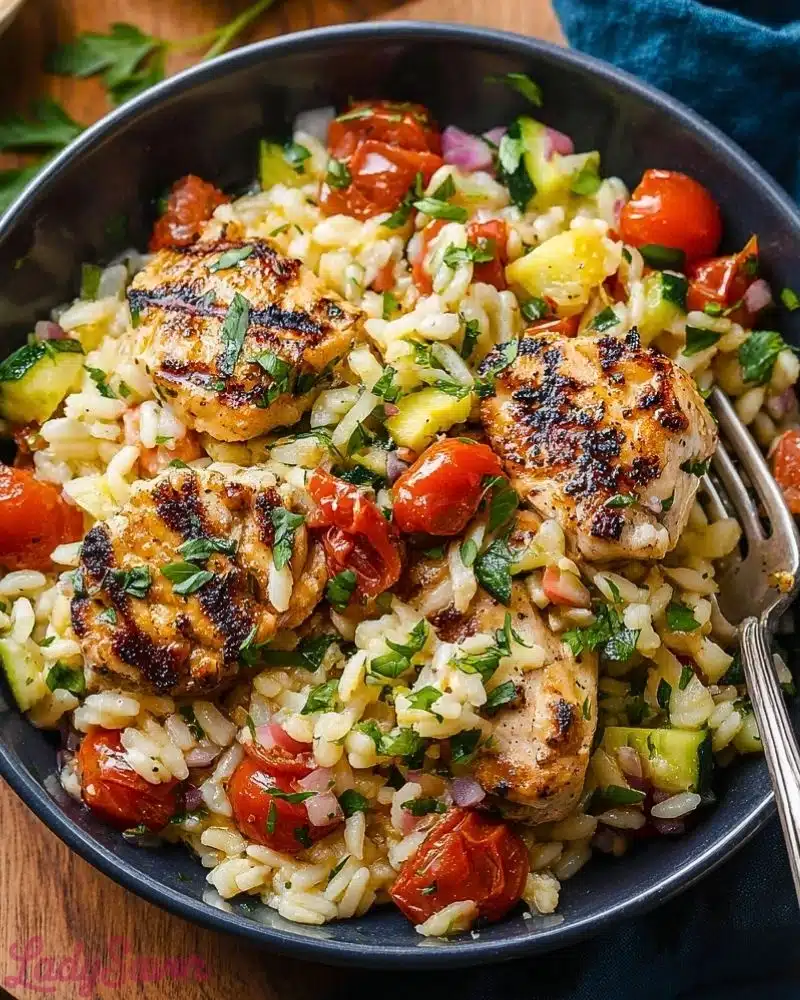
- Prep your veggies and herbs: Rinse and chop tomatoes, cucumbers, bell peppers, and onions into bite-sized pieces. Chop fresh parsley and oregano finely. This step should take about 10 minutes.
- Cook grains: Rinse 1 cup (190 g) of quinoa or brown rice and cook according to package instructions—usually 15-20 minutes. Fluff with a fork and set aside.
- Prepare proteins: Season 1 lb (450 g) of chicken breasts or fish fillets with salt, pepper, and dried oregano. Heat 2 tbsp (30 ml) olive oil in a skillet over medium-high heat and cook chicken for 5-6 minutes per side or fish for 3-4 minutes per side, until cooked through and golden. Remove from heat and let rest.
- Roast or sauté veggies: Toss eggplant, zucchini, or bell peppers with olive oil and a pinch of salt. Roast at 400°F (200°C) for 20 minutes or sauté in a pan for 8-10 minutes until tender and slightly caramelized.
- Mix the dressing: In a small bowl, whisk together 3 tbsp (45 ml) olive oil, juice of 1 lemon, 1 minced garlic clove, and a pinch of cumin. Adjust salt and pepper to taste.
- Assemble the dish: Combine the cooked grains, roasted veggies, and chopped fresh vegetables in a large bowl. Drizzle the dressing over and toss gently.
- Add finishing touches: Crumble ½ cup (75 g) feta cheese on top and sprinkle toasted pine nuts or almonds for crunch. Garnish with fresh herbs.
- Serve: Plate with sliced grilled chicken or fish on the side, or mix in cubed tofu for a vegetarian version.
Keep an eye on the protein while cooking—it should feel firm but juicy inside. If it starts to brown too quickly, lower the heat slightly. When roasting veggies, stirring once halfway helps them cook evenly. The dressing can be made ahead and stored in the fridge for up to 3 days, which saves time on busy evenings. This method works well with other dishes too—I’ve had success pairing it with a quick crispy Asian shrimp stir fry for a fusion twist on Mediterranean flavors.
Cooking Tips & Techniques
One thing I’ve learned through trial and error is that timing is everything with Mediterranean diet dinners. For example, don’t overcrowd your pan when sautéing veggies or proteins—it causes steaming rather than browning, and that flavor-rich caramelization is key. Patting chicken dry before seasoning helps achieve a golden crust. Also, don’t skip resting your proteins after cooking; it locks in juices and keeps the meat tender.
When roasting vegetables, tossing them in olive oil and a pinch of salt ahead of time encourages that perfect crispy edge. I used to forget this step and end up with soggy veggies, so trust me, this small detail matters. For the dressing, freshly squeezed lemon juice brightens everything, but beware of using bottled lemon juice—it just doesn’t have that same vibrant punch.
Multitasking helps here: While your grains cook, prep your veggies. This way, the entire dinner comes together in one smooth flow without feeling rushed. And if you’re wondering about consistency, I always recommend tasting at every stage—season the grains lightly and adjust the dressing, so nothing feels bland.
Variations & Adaptations
- Vegetarian option: Swap chicken or fish for grilled halloumi cheese or roasted chickpeas for protein-rich, satisfying meals.
- Seasonal twists: In colder months, roast root vegetables like carrots and beets instead of zucchini and peppers for a heartier feel.
- Low-carb adaptation: Use cauliflower rice in place of grains to cut down on carbohydrates without sacrificing texture.
- Allergen-friendly: For nut allergies, omit pine nuts or almonds and add sunflower seeds instead for crunch.
- Spicy kick: Add a pinch of crushed red pepper flakes to the dressing or sprinkle smoked paprika on roasted veggies for warmth.
One personal favorite variation is adding a dollop of Greek yogurt mixed with fresh dill on top—makes the dish feel a bit more indulgent without undoing the healthfulness. For those short on time, using pre-cooked rotisserie chicken works well, too. This recipe’s flexibility reminds me of the way I sometimes switch up the high-protein buddha bowl recipe to fit the season and pantry contents.
Serving & Storage Suggestions
These Mediterranean diet dinners shine best served warm or at room temperature. A drizzle of extra virgin olive oil just before serving adds a silky finish and enhances the flavors. Pair with a simple green salad dressed lightly with balsamic vinegar or a crusty whole grain bread to round out the meal.
Leftovers keep well in an airtight container in the refrigerator for 3 to 4 days. The flavors actually deepen overnight, making for a tastier lunch the next day. Reheat gently on the stovetop or microwave, adding a splash of water or olive oil to avoid drying out the grains and veggies.
For longer storage, components like cooked grains or roasted veggies freeze well separately for up to a month. Just thaw in the fridge overnight and reheat as needed. This makes it easy to prep meals ahead of time and reduces weekday cooking stress.
Nutritional Information & Benefits
Each serving of these Mediterranean diet dinners typically contains around 400-500 calories, with a balanced mix of lean protein, healthy fats, and complex carbohydrates. Olive oil and nuts provide monounsaturated fats that support heart health, while fresh vegetables contribute fiber, vitamins, and antioxidants.
Using whole grains like quinoa or brown rice adds sustained energy and helps maintain steady blood sugar levels. The lean proteins keep you full without excess saturated fat. Plus, the diet’s emphasis on fresh herbs and citrus means fewer processed seasonings and added sugars.
These dinners naturally fit gluten-free and low-carb diets with simple ingredient swaps. Just watch out for dairy if you have lactose intolerance; opting for plant-based cheeses or skipping feta can keep it gentle on your stomach. From a wellness perspective, these meals nourish your body without feeling like a chore—an important balance for healthy eating that lasts.
Conclusion
Healthy Mediterranean diet dinners have become a reliable way to enjoy flavorful, nourishing meals every single night. They’re easy to make, flexible enough to suit your mood or pantry, and satisfying in a way that keeps you coming back without feeling deprived. I love how these dishes bring a little sunshine to my table, even on the busiest evenings, and trust me, the fresh herbs and citrus notes make all the difference.
Feel free to customize the recipes to your taste—swap veggies, add your favorite nuts, or try a new protein each week. And if you’re curious to experiment with other comforting, wholesome dishes, you might enjoy the healthy healing chicken soup or the easy garlic butter baked salmon recipes already on the blog.
Let me know how your Mediterranean dinners turn out, and don’t hesitate to share your favorite twists and tips. Here’s to simple meals that feel like a warm hug after a busy day!
Frequently Asked Questions
What is the Mediterranean diet, and why is it healthy?
The Mediterranean diet emphasizes whole grains, fresh vegetables, fruits, nuts, legumes, olive oil, and lean proteins like fish and poultry. It’s linked to heart health, weight management, and improved longevity thanks to its focus on healthy fats and nutrient-rich foods.
Can I make these Mediterranean diet dinners vegan?
Absolutely! Replace animal proteins with plant-based options like tofu, tempeh, or chickpeas, and swap out dairy ingredients for vegan alternatives such as coconut yogurt or nut-based cheeses.
How can I meal prep Mediterranean dinners for the week?
Cook grains and roast vegetables in advance, store them separately in airtight containers, and assemble meals quickly when needed. Proteins can be grilled ahead or swapped with quick-cooking options like canned beans.
Are Mediterranean diet dinners suitable for weight loss?
Yes, because they focus on nutrient-dense foods and healthy fats that keep you full longer. Portion control and choosing lean proteins help support weight management within this balanced eating style.
What are some quick Mediterranean dinner ideas for busy nights?
Try simple grilled fish with a quick cucumber-tomato salad, or a warm chickpea and veggie sauté served over quinoa. Recipes like the crock pot Cajun chicken pasta also offer flavorful, fuss-free options with a Mediterranean twist.
Pin This Recipe!
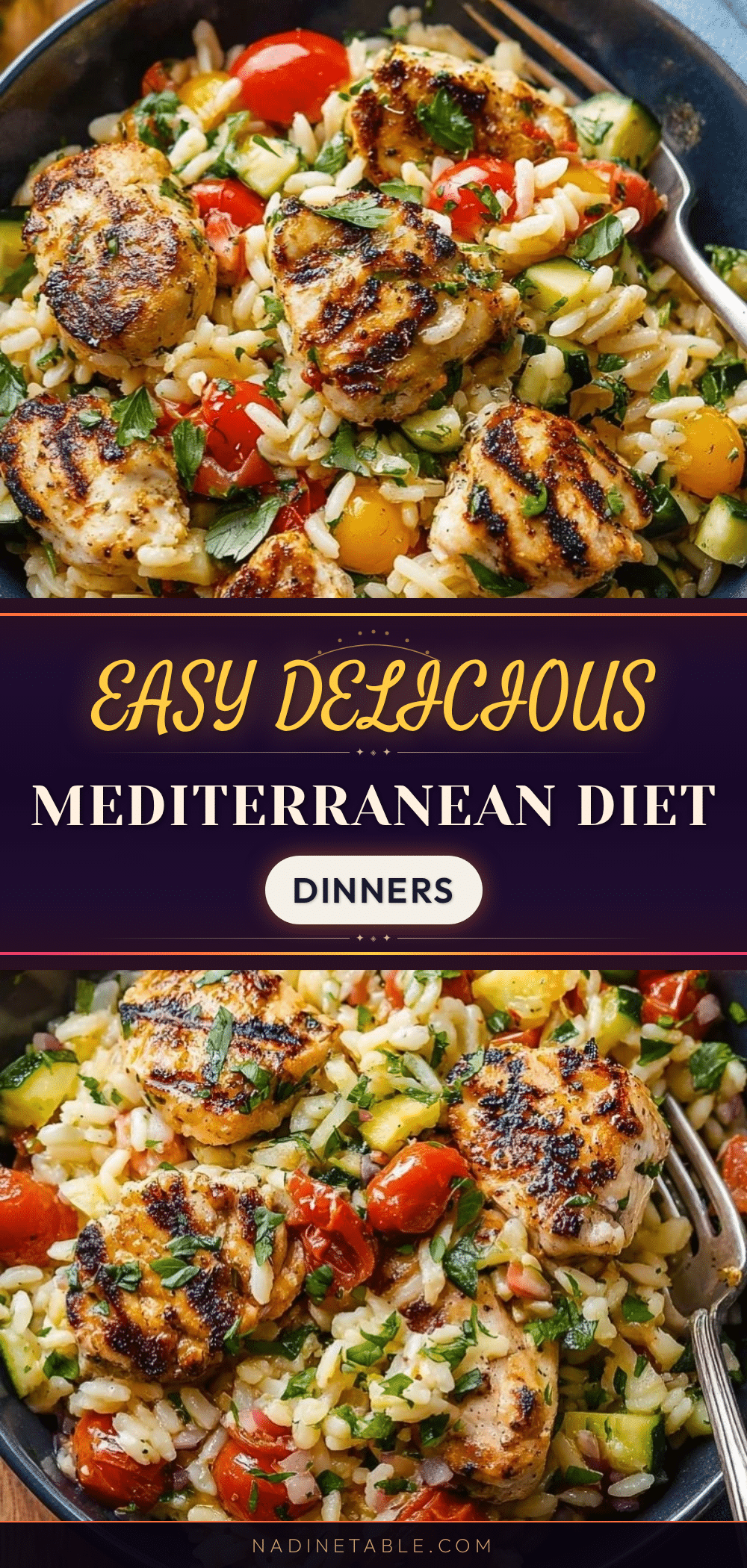
Healthy Mediterranean Diet Dinners Easy Recipes for Every Night
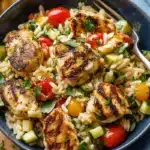
A collection of quick, easy, and wholesome Mediterranean diet dinners that balance health and deliciousness with fresh ingredients, lean proteins, and vibrant flavors.
- Prep Time: 10 minutes
- Cook Time: 30 minutes
- Total Time: 40 minutes
- Yield: 4 servings 1x
- Category: Main Course
- Cuisine: Mediterranean
Ingredients
- 2 tbsp extra virgin olive oil, cold-pressed
- 1 cup fresh vegetables (ripe tomatoes, cucumbers, bell peppers, red onions, seasonal greens), chopped
- 1 cup legumes (chickpeas, lentils, or white beans)
- 1 cup whole grains (brown rice, quinoa, or farro)
- 1 lb skinless chicken breasts, fresh fish fillets, or firm tofu
- 2 tbsp fresh parsley, chopped
- 2 tbsp fresh oregano, chopped
- 1 tbsp fresh thyme or basil (optional)
- 1 clove garlic, minced
- 1 tsp ground cumin
- Juice of 1 lemon
- ½ cup (75 g) crumbled feta cheese or Greek yogurt
- 2 tbsp toasted pine nuts, almonds, or sesame seeds
- Salt and pepper to taste
Instructions
- Rinse and chop tomatoes, cucumbers, bell peppers, and onions into bite-sized pieces. Finely chop fresh parsley and oregano. (Approx. 10 minutes)
- Rinse 1 cup (190 g) of quinoa or brown rice and cook according to package instructions (usually 15-20 minutes). Fluff with a fork and set aside.
- Season 1 lb (450 g) of chicken breasts or fish fillets with salt, pepper, and dried oregano.
- Heat 2 tbsp (30 ml) olive oil in a skillet over medium-high heat and cook chicken for 5-6 minutes per side or fish for 3-4 minutes per side until cooked through and golden. Remove from heat and let rest.
- Toss eggplant, zucchini, or bell peppers with olive oil and a pinch of salt. Roast at 400°F (200°C) for 20 minutes or sauté in a pan for 8-10 minutes until tender and slightly caramelized.
- In a small bowl, whisk together 3 tbsp (45 ml) olive oil, juice of 1 lemon, 1 minced garlic clove, and a pinch of cumin. Adjust salt and pepper to taste.
- Combine the cooked grains, roasted veggies, and chopped fresh vegetables in a large bowl. Drizzle the dressing over and toss gently.
- Crumble ½ cup (75 g) feta cheese on top and sprinkle toasted pine nuts or almonds for crunch. Garnish with fresh herbs.
- Serve with sliced grilled chicken or fish on the side, or mix in cubed tofu for a vegetarian version.
Notes
Pat chicken dry before seasoning for a golden crust. Stir roasted veggies halfway through cooking for even caramelization. Dressing can be made ahead and stored in the fridge for up to 3 days. For nut allergies, omit nuts and substitute sunflower seeds. Use freshly squeezed lemon juice for best flavor. Rest proteins after cooking to lock in juices.
Nutrition
- Serving Size: 1 serving (approxima
- Calories: 450
- Sugar: 6
- Sodium: 450
- Fat: 22
- Saturated Fat: 4
- Carbohydrates: 35
- Fiber: 7
- Protein: 30
Keywords: Mediterranean diet, healthy dinners, quick recipes, easy meals, lean protein, whole grains, roasted vegetables, feta cheese, olive oil, plant-based protein