Love this? Save it for later!
Share the inspiration with your friends
“You really don’t think a quick weeknight meal can taste this good, right?” That was my coworker’s skeptical text after I casually mentioned I’d whipped up these Korean BBQ steak rice bowls with fresh veggie toppings for dinner. Honestly, I get it — sometimes “fast and easy” meals end up tasting like, well, cardboard. But this recipe? It sneaked up on me. I wasn’t aiming for a culinary masterpiece that night; I just wanted something filling and quick. The marinade was a last-minute concoction from what I had on hand, and the fresh veggies were whatever was hanging out in the fridge looking lonely.
As I sliced into that perfectly seared, tender steak and layered it over steaming rice with crisp cucumbers, carrots, and a punchy sauce, I realized this bowl was hitting every note — savory, sweet, tangy, fresh. The crunch from the veggies contrasted the juicy meat in a way that felt almost indulgent. I ended up making it three times that week (yes, three!), each time tweaking the toppings or sauce just a bit. What started as a casual experiment turned into a little obsession.
It’s funny how food can surprise you like that — transforming an ordinary evening into something a bit special, without all the fuss. If you’re craving something that feels fresh but hearty, that’s got bold flavor without a complicated prep, these Korean BBQ steak rice bowls might just become your go-to too. They’ve stuck with me because they’re fuss-free but never boring, and honestly, they make weeknight dinners feel like a treat. Let’s get into how you can make them in your own kitchen.
Why You’ll Love This Recipe
After testing this Korean BBQ steak rice bowls recipe multiple times (and having a few friends try it too), I can confidently say it’s a keeper for so many reasons:
- Quick & Easy: The whole meal comes together in about 30 minutes, perfect for busy nights when you want something satisfying without the wait.
- Simple Ingredients: No exotic products here. Most ingredients are pantry staples or everyday produce — no need for special grocery runs.
- Perfect for Any Occasion: Whether it’s a casual family dinner or a laid-back weekend lunch, these bowls work beautifully.
- Crowd-Pleaser: The flavor combo is universally loved, and the fresh veggie toppings add a light crunch that everyone appreciates.
- Unbelievably Delicious: The marinade balances sweet, savory, and umami notes, creating steak that’s tender and flavorful — it’s comfort food with a fresh twist.
What sets this recipe apart? The marinade uses a blend of soy sauce, garlic, and a hint of brown sugar that’s cooked down slightly to intensify flavor. Plus, the fresh veggie toppings aren’t just thrown in; they’re carefully chosen to add brightness and texture. Unlike many Korean BBQ bowls that lean heavily on sauce or meat, this one feels balanced and fresh — without sacrificing that crave-worthy richness.
This recipe is the kind that makes you pause mid-bite because it’s just so good. It’s like comfort food reimagined — fast, fresh, and full of personality. I’ve found it’s a great way to impress without any stress, turning a simple meal into a memorable one.
What Ingredients You Will Need
This recipe uses simple, wholesome ingredients to deliver bold flavor and satisfying texture without the fuss. Most of these are pantry staples or everyday produce you can easily find.
- For the Steak and Marinade:
- 1 lb (450g) flank or skirt steak, thinly sliced against the grain
- 1/4 cup soy sauce (I prefer Kikkoman for a balanced saltiness)
- 2 tablespoons brown sugar (adds that caramelized touch)
- 1 tablespoon sesame oil (to bring that signature toasty flavor)
- 3 garlic cloves, minced (fresh is best for punchy aroma)
- 1 teaspoon freshly grated ginger (optional but recommended for warmth)
- 1 tablespoon rice vinegar (brightens the marinade)
- 1 teaspoon gochujang or chili paste (for a subtle kick — add more if you love heat)
- For the Rice Base:
- 2 cups cooked jasmine or short-grain rice (about 1 cup uncooked, yields 2 cups cooked)
- Optional: a splash of sesame oil mixed into the rice for added fragrance
- Fresh Veggie Toppings:
- 1 cup cucumber, thinly sliced or julienned (adds a refreshing crunch)
- 1 cup carrots, shredded or julienned (sweet and crisp)
- 1/2 cup radishes, thinly sliced (peppery bite)
- 1/4 cup green onions, sliced thin
- 1/4 cup fresh cilantro leaves (optional, but brightens the bowl)
- Additional Garnishes:
- Toasted sesame seeds (for nuttiness and texture)
- Kimchi or pickled vegetables (for a tangy contrast, if you like)
- Sliced avocado (for creamy balance)
If you’re short on any fresh veggies, feel free to swap in what you have — bell peppers, snap peas, or even lightly steamed broccoli work well here. For a gluten-free option, just replace soy sauce with tamari. I once tried almond flour crusted steak for a twist, but honestly, the simple marinade shines best with quality meat and fresh toppings.
Equipment Needed
- Cast iron skillet or heavy-bottomed frying pan: Ideal for getting a nice sear on the steak. Don’t have one? A stainless steel pan works fine, just make sure it’s hot and well-oiled.
- Mixing bowls: For the marinade and tossing veggies.
- Sharp knife and cutting board: Essential for slicing the steak thinly and prepping your fresh veggies.
- Rice cooker or pot with lid: For perfectly cooked rice. I usually use a rice cooker like the Zojirushi for foolproof results, but stovetop works just as well.
- Measuring spoons and cups: To get those marinade ratios just right.
One pro tip: if you don’t have a mandoline for slicing veggies thinly, a sharp knife and patience will do the trick. Also, keep your skillet well-seasoned if it’s cast iron for that beautiful crust. For budget-friendly setups, a non-stick pan is a decent alternative, though you might miss out on some char.
Preparation Method
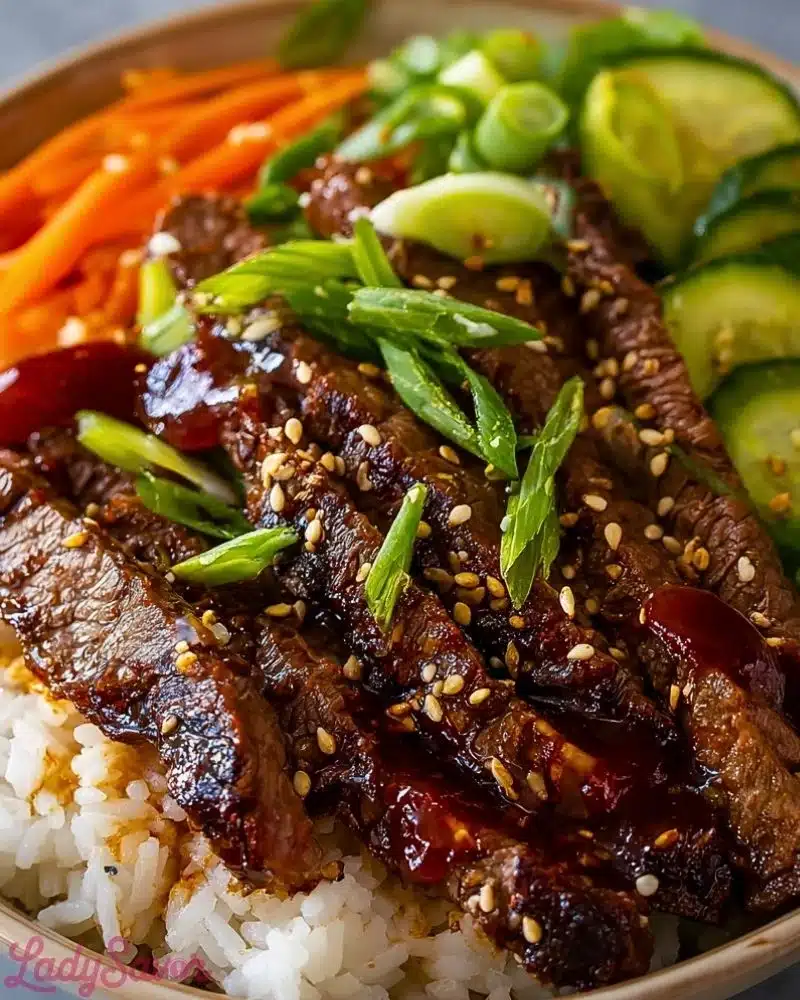
- Prepare the marinade: In a medium bowl, whisk together 1/4 cup soy sauce, 2 tbsp brown sugar, 1 tbsp sesame oil, minced garlic, grated ginger, rice vinegar, and gochujang until the sugar dissolves completely. This should take about 3 minutes.
- Slice the steak: Using a sharp knife, thinly slice your flank or skirt steak against the grain into strips about 1/4 inch (0.6 cm) thick. This helps keep the steak tender after cooking. If you’re unsure how to slice against the grain, look for the lines in the meat and cut perpendicular.
- Marinate the steak: Toss the sliced steak into the marinade, making sure every piece is coated. Cover and let it sit at room temperature for 15-20 minutes, or refrigerate for up to 1 hour if prepping ahead. Don’t marinate longer than 2 hours to avoid a mushy texture.
- Cook the rice: While the steak marinates, cook 1 cup uncooked rice according to package instructions (usually about 15 minutes). When done, fluff and optionally stir in a teaspoon of sesame oil for extra aroma.
- Prepare fresh veggie toppings: Wash and thinly slice cucumbers, shred carrots, slice radishes, and chop green onions. Arrange these in separate bowls or on a platter for easy assembly later. This step takes around 10 minutes.
- Sear the steak: Heat your skillet over medium-high heat until very hot (about 2-3 minutes). Add a teaspoon of oil, then add the marinated steak slices in a single layer. Don’t overcrowd the pan — cook in batches if needed. Sear each side for 1-2 minutes until nicely browned and cooked through but still juicy.
- Assemble the bowls: Spoon warm rice into serving bowls, top with the seared steak, and then pile on the fresh veggie toppings. Sprinkle toasted sesame seeds over everything and add optional garnishes like kimchi or avocado slices.
- Enjoy: Serve immediately with extra soy sauce or a drizzle of spicy mayo if you like. The contrast of warm steak, fluffy rice, and crisp veggies is irresistible.
Quick tip: keep your skillet hot to get that nice caramelization, but avoid burning the sugar in the marinade by watching the heat closely. If you notice the pan smoking excessively, lower the heat slightly. The steak should be tender and juicy, not tough or dry.
Cooking Tips & Techniques
Cooking Korean BBQ steak rice bowls is all about balancing flavors and textures. Here are a few things I’ve learned from cooking this recipe over several weeks:
- Slice the steak thinly: This is crucial. Thin slices cook quickly and remain tender. Thick cuts can turn chewy unless cooked just right.
- Marinate but don’t overdo it: The marinade adds flavor and tenderizes, but too long can break down the meat too much. I stick to under an hour.
- High heat searing: Use a hot pan to get that deep, caramelized crust. That’s where the magic happens for flavor. Don’t stir too much once in the pan.
- Prep your veggies while the steak cooks: Multitasking saves time and keeps everything fresh.
- Balance your toppings: Fresh, crunchy veggies like cucumber and radish keep the bowl from feeling heavy. I once added pickled jalapeños for heat — a game changer.
- Rest the steak briefly: Letting cooked steak sit for a few minutes before serving helps juices redistribute, keeping it juicy.
One mistake I made early on was crowding the pan, which caused the steak to steam instead of sear. Cooking in batches is worth the extra effort for that perfect crust. Also, resist the urge to over-marinate or overcook — those are the easy traps that ruin the texture.
Variations & Adaptations
This Korean BBQ steak rice bowl is a flexible canvas. Here are some ways to switch it up based on your mood or dietary needs:
- Protein swaps: Try thinly sliced chicken thighs or pork tenderloin with the same marinade for a different twist. For a vegetarian option, marinated tofu or tempeh works well.
- Spice it up: Add extra gochujang or fresh chili flakes to the marinade for more heat. Alternatively, serve with a side of salsa chicken for a fusion flair.
- Seasonal veggies: Swap out cucumbers and radishes for roasted sweet potatoes or grilled zucchini in cooler months.
- Grain alternatives: Use cauliflower rice or quinoa instead of regular rice for a low-carb or protein boost.
- Sauces: Drizzle with a quick spicy mayo (mayo mixed with sriracha) or a simple soy-lime dressing to add layers of flavor.
One personal favorite variation is adding a fried egg on top (sunny side up) — the runny yolk brings everything together beautifully. If you’re curious about other rice bowl ideas, the cheesy southwest chicken and rice bowl offers a comforting alternative with a different flavor profile.
Serving & Storage Suggestions
Serve these Korean BBQ steak rice bowls warm, straight from the pan to the table. The contrast of hot steak and rice with crisp, cool veggies is key to the experience.
Pair the bowls with simple sides like steamed edamame, pickled cucumbers, or even a light cucumber salad to keep things fresh. Drinks-wise, a cold glass of iced green tea or a sparkling cherry lime soda (like the one in that recipe) complements the savory flavors nicely.
To store leftovers, keep the steak and rice separate from the fresh veggies to avoid sogginess. Store in airtight containers in the refrigerator for up to 3 days. When reheating, gently warm the steak and rice in a skillet or microwave, then add fresh toppings just before serving.
Flavors develop slightly as the steak marinates and rests, but the fresh veggies always taste best added right before eating to maintain their crunch and brightness.
Nutritional Information & Benefits
Estimated per serving (serves 4):
| Calories | 450-500 kcal |
|---|---|
| Protein | 35g |
| Carbohydrates | 45g |
| Fat | 12g |
This recipe packs a good protein punch from the steak, balanced with fiber and vitamins from fresh veggies. The sesame oil and garlic add heart-healthy fats and antioxidants. For gluten-free eaters, swapping soy sauce with tamari is a safe bet. The fresh vegetables provide vitamin C and crunch without extra calories, making this meal balanced and satisfying.
From a wellness perspective, it’s a wholesome dinner that feels indulgent but doesn’t weigh you down — perfect for anyone seeking a good protein and veggie combo without complicated prep.
Conclusion
This Korean BBQ steak rice bowl recipe is a straightforward, flavorful way to bring fresh, satisfying meals to your table without fuss. I love how it balances tender, savory meat with crisp vegetables and fluffy rice — it’s a meal that feels thoughtful but comes together quickly, which is a win in my book.
Feel free to tweak the toppings or spice level to suit your taste — that’s part of the fun. Whether you’re cooking for yourself or feeding a crowd, it’s a versatile dish that doesn’t disappoint. I hope you enjoy making it as much as I’ve enjoyed sharing it.
If you try this recipe, send me a note or share your favorite twist — I’m always curious how others make it their own. Here’s to good food that’s fresh, flavorful, and fuss-free!
Frequently Asked Questions
Can I use other cuts of beef for this recipe?
Yes! Flank and skirt steak are ideal for their flavor and texture, but you can also use sirloin or ribeye. Just slice thinly and adjust cooking time to avoid toughness.
What if I don’t have gochujang or chili paste?
You can substitute with a small amount of sriracha or chili flakes for heat, or omit entirely for a milder bowl.
Can I prepare the steak marinade ahead of time?
Absolutely! You can marinate the steak for up to 1 hour in the fridge before cooking. Longer marinating may affect texture.
What’s the best way to reheat leftovers?
Warm the steak and rice gently in a skillet or microwave, then add fresh veggies right before eating to keep their crunch.
Is this recipe suitable for meal prep?
Yes, it stores well for 3 days if you keep the components separate. Just assemble fresh before eating for best results.
Pin This Recipe!
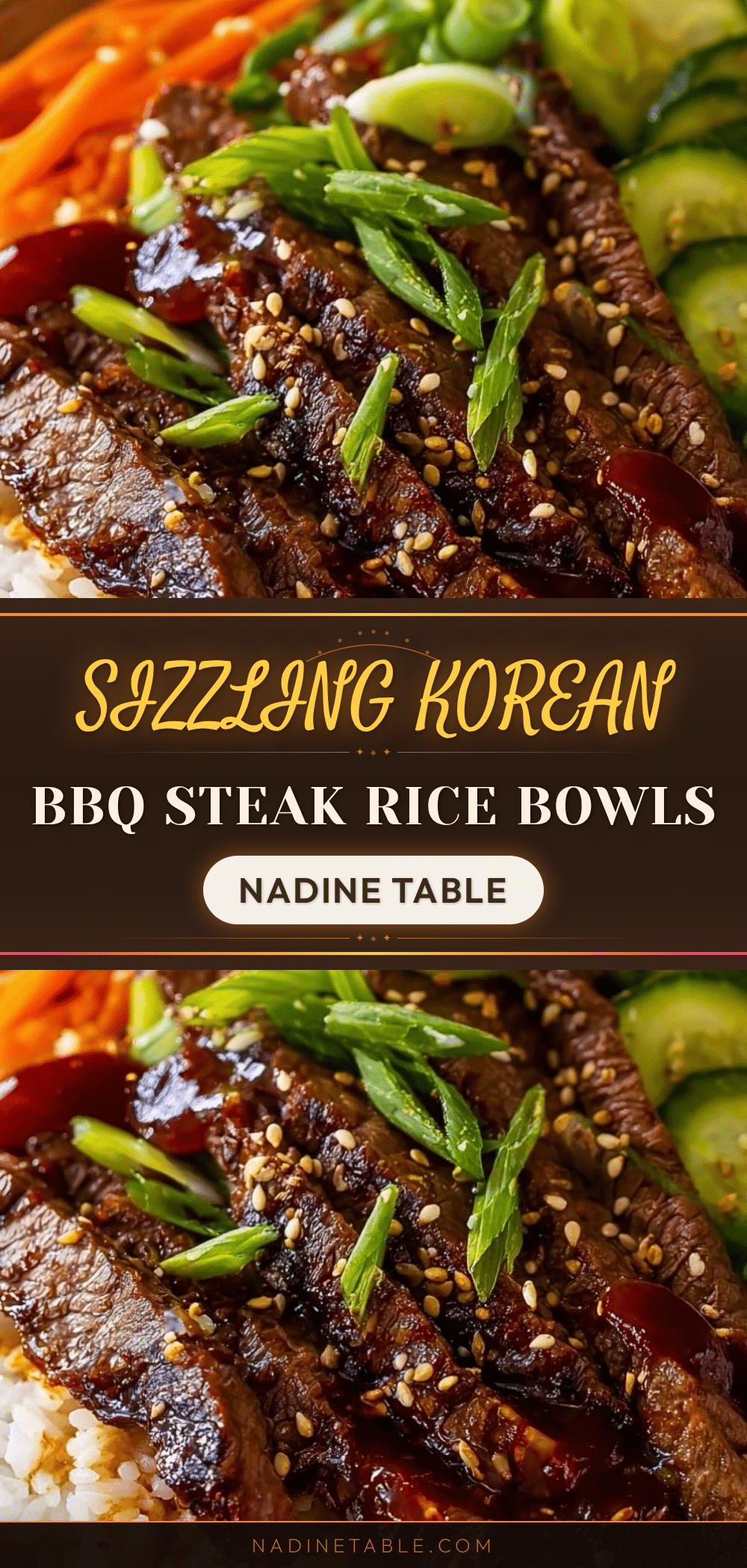
Flavorful Korean BBQ Steak Rice Bowls Recipe Easy Fresh Veggie Toppings
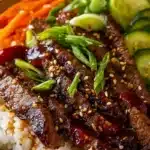
A quick and easy Korean BBQ steak rice bowl featuring tender marinated steak, steamed rice, and fresh crunchy veggie toppings for a balanced and flavorful weeknight meal.
- Prep Time: 15 minutes
- Cook Time: 15 minutes
- Total Time: 30 minutes
- Yield: 4 servings 1x
- Category: Main Course
- Cuisine: Korean
Ingredients
- 1 lb flank or skirt steak, thinly sliced against the grain
- 1/4 cup soy sauce
- 2 tablespoons brown sugar
- 1 tablespoon sesame oil
- 3 garlic cloves, minced
- 1 teaspoon freshly grated ginger (optional)
- 1 tablespoon rice vinegar
- 1 teaspoon gochujang or chili paste
- 2 cups cooked jasmine or short-grain rice (about 1 cup uncooked)
- Optional: a splash of sesame oil mixed into the rice
- 1 cup cucumber, thinly sliced or julienned
- 1 cup carrots, shredded or julienned
- 1/2 cup radishes, thinly sliced
- 1/4 cup green onions, sliced thin
- 1/4 cup fresh cilantro leaves (optional)
- Toasted sesame seeds (for garnish)
- Kimchi or pickled vegetables (optional garnish)
- Sliced avocado (optional garnish)
Instructions
- Prepare the marinade by whisking together soy sauce, brown sugar, sesame oil, minced garlic, grated ginger, rice vinegar, and gochujang until sugar dissolves (about 3 minutes).
- Thinly slice the flank or skirt steak against the grain into 1/4 inch thick strips.
- Toss the sliced steak in the marinade, cover, and let sit at room temperature for 15-20 minutes or refrigerate up to 1 hour. Do not marinate longer than 2 hours.
- Cook 1 cup uncooked rice according to package instructions (about 15 minutes). Fluff and optionally stir in a teaspoon of sesame oil.
- Wash and prepare fresh veggie toppings: slice cucumbers, shred carrots, slice radishes, and chop green onions.
- Heat a skillet over medium-high heat until very hot. Add a teaspoon of oil and sear the marinated steak slices in batches for 1-2 minutes per side until browned and cooked through but still juicy.
- Assemble bowls by spooning warm rice into serving bowls, topping with seared steak, and piling on fresh veggie toppings.
- Sprinkle toasted sesame seeds and add optional garnishes like kimchi or avocado slices.
- Serve immediately with extra soy sauce or spicy mayo if desired.
Notes
Do not marinate steak longer than 2 hours to avoid mushy texture. Slice steak thinly against the grain for tenderness. Cook steak in batches to avoid steaming. Keep skillet hot for good caramelization but watch heat to prevent burning marinade sugar. Fresh veggies should be added just before serving to maintain crunch. For gluten-free, substitute soy sauce with tamari.
Nutrition
- Serving Size: 1 bowl (approximatel
- Calories: 475
- Sugar: 8
- Sodium: 900
- Fat: 12
- Saturated Fat: 2
- Carbohydrates: 45
- Fiber: 4
- Protein: 35
Keywords: Korean BBQ, steak rice bowl, quick dinner, easy recipe, fresh veggies, weeknight meal, marinade, healthy, flavorful