Love this? Save it for later!
Share the inspiration with your friends
The first time I made Korean fried chicken, it was a complete accident. I had been craving that specific crunch—the one that shatters when you bite into it, the kind that leaves your fingers glistening with a sweet-spicy glaze. I was standing in my kitchen, staring at a pack of chicken wings, and I just thought, “Why not try the double-fry thing I read about?” Honestly, I wasn’t expecting much. I figured it would be decent, maybe a little better than my usual oven-baked wings.
But then, the first batch came out of the oil. The sound. That crisp, paper-thin crackle when I tapped a drumette against the side of the bowl. I knew I was onto something. By the time I tossed them in that sticky, fiery gochujang glaze, the kitchen smelled like a Seoul street market. My husband walked in, grabbed one off the rack, and just stood there, chewing, not saying a word. Then he grabbed another. Then he asked if we could have it every week.
That was the moment this extra crispy Korean fried chicken with gochujang glaze became a staple in our house. It’s not just fried chicken. It’s the kind of meal that makes you forget about takeout menus. It’s a weekend project that pays you back in pure, crunchy, spicy joy. And the best part? It’s way easier than it looks. You just have to trust the process—and the double fry.
Why You’ll Love This Recipe
This isn’t just another fried chicken recipe. This is the one that will ruin all other fried chicken for you. I’ve tested this method more times than I care to admit, tweaking the batter, the oil temperature, the timing. I’ve burned my fingers, my patience, and a few batches that ended up in the trash. But I finally cracked the code. Here’s why this version stands out:
- Extra Crispy, Not Greasy: The double-fry method is the secret. The first fry cooks the chicken through, the second fry creates that ultra-crunchy, shatteringly crisp skin that stays crunchy even under the glaze.
- Bold, Balanced Gochujang Glaze: It’s sweet, savory, and spicy all at once. The gochujang (Korean chili paste) gives it that deep, fermented umami flavor, while honey and rice vinegar keep it from being one-dimensional.
- Simple Pantry Ingredients: No weird, hard-to-find stuff. You probably have most of the dry ingredients already. The star player is the gochujang, which is easy to find in most grocery stores now.
- Perfect for Game Day or Any Day: This Korean fried chicken is a crowd-pleaser. It’s the kind of dish that disappears at parties. People hover around the platter. It’s also fantastic for a cozy night in when you want something indulgent.
- Restaurant-Quality at Home: I’m not exaggerating. The texture and flavor are spot-on with what you’d get at a Korean fried chicken joint. It’s all about the technique.
What makes this recipe different from the rest? It’s the wet batter. Most recipes use a dry flour dredge, which can get cakey and heavy. This one uses a thin, wet batter made with cornstarch and a little baking powder. It fries up light, lacy, and incredibly crispy. It’s the kind of crunch that makes you close your eyes after the first bite. It’s comfort food reimagined—crunchier, spicier, and way more satisfying.
What Ingredients You Will Need
This recipe uses simple, wholesome ingredients to deliver that signature crunch and bold flavor. Nothing fancy, just smart choices. Here’s what you’ll need:
For the Chicken & Marinade:
- 2 lbs chicken wings or drumettes (about 10-12 pieces) – I prefer wings, but drumettes work great too. Pat them dry with paper towels to ensure the marinade sticks.
- 1 teaspoon salt – For seasoning the chicken.
- ½ teaspoon black pepper – Freshly ground is best.
- 1 tablespoon ginger, grated – Adds a warm, aromatic kick.
- 2 tablespoons soy sauce – Use low-sodium to control the saltiness.
- 1 tablespoon rice wine (mirin) – Helps tenderize the meat. You can substitute with dry sherry or skip it.
For the Wet Batter:
- ½ cup cornstarch – This is the key to the crispiness. Cornstarch creates a lighter, airier crust than all-purpose flour.
- ¼ cup all-purpose flour – Just a little for structure.
- 1 teaspoon baking powder – Makes the batter puffy and lacy.
- ½ teaspoon salt – Seasoning for the batter.
- ¼ teaspoon white pepper – Gives a subtle heat without the black specks.
- ½ cup ice-cold water – The colder the better. Ice water creates steam pockets, which make the crust extra crispy.
- 1 large egg – Adds richness and helps the batter stick.
For the Gochujang Glaze:
- 3 tablespoons gochujang (Korean chili paste) – The heart of the flavor. I recommend the brand “O’Food” for a balanced spice level.
- 2 tablespoons honey – For sweetness. You can use brown sugar or maple syrup.
- 1 tablespoon soy sauce – Adds depth.
- 1 tablespoon rice vinegar – Cuts through the richness.
- 2 cloves garlic, minced – Because everything is better with garlic.
- 1 teaspoon sesame oil – For that nutty, toasted finish.
- 1 tablespoon water – To thin the glaze slightly.
For Frying & Garnish:
- Neutral oil for frying – About 4-5 cups. Use canola, vegetable, or peanut oil. Avoid olive oil; it burns too easily.
- Toasted sesame seeds – For garnish.
- Sliced green onions – For freshness and color.
Substitution Note: If you’re gluten-sensitive, you can swap the all-purpose flour for a gluten-free 1:1 blend. The texture will still be crispy, though slightly different.
Equipment Needed
You don’t need a deep fryer for this. A heavy-bottomed pot or a Dutch oven works perfectly. Here’s what I use:
- Large Dutch oven or heavy pot – For deep frying. A 5-6 quart pot is ideal. It holds heat well and prevents temperature drops.
- Deep-fry thermometer – Non-negotiable. Maintaining the right oil temperature is crucial for crispy, non-greasy chicken. I’ve ruined batches by guessing.
- Wire rack set inside a baking sheet – For draining the fried chicken. The rack keeps the chicken from sitting in oil and getting soggy.
- Tongs – For safely lowering and removing the chicken from the hot oil.
- Large mixing bowls – One for the marinade, one for the batter.
- Small saucepan – For making the glaze.
- Paper towels – For drying the chicken and final draining.
Budget-Friendly Tip: If you don’t have a deep-fry thermometer, you can test the oil by dropping a small bit of batter in. If it sizzles immediately and floats to the top, the oil is ready (around 350°F).
Preparation Method
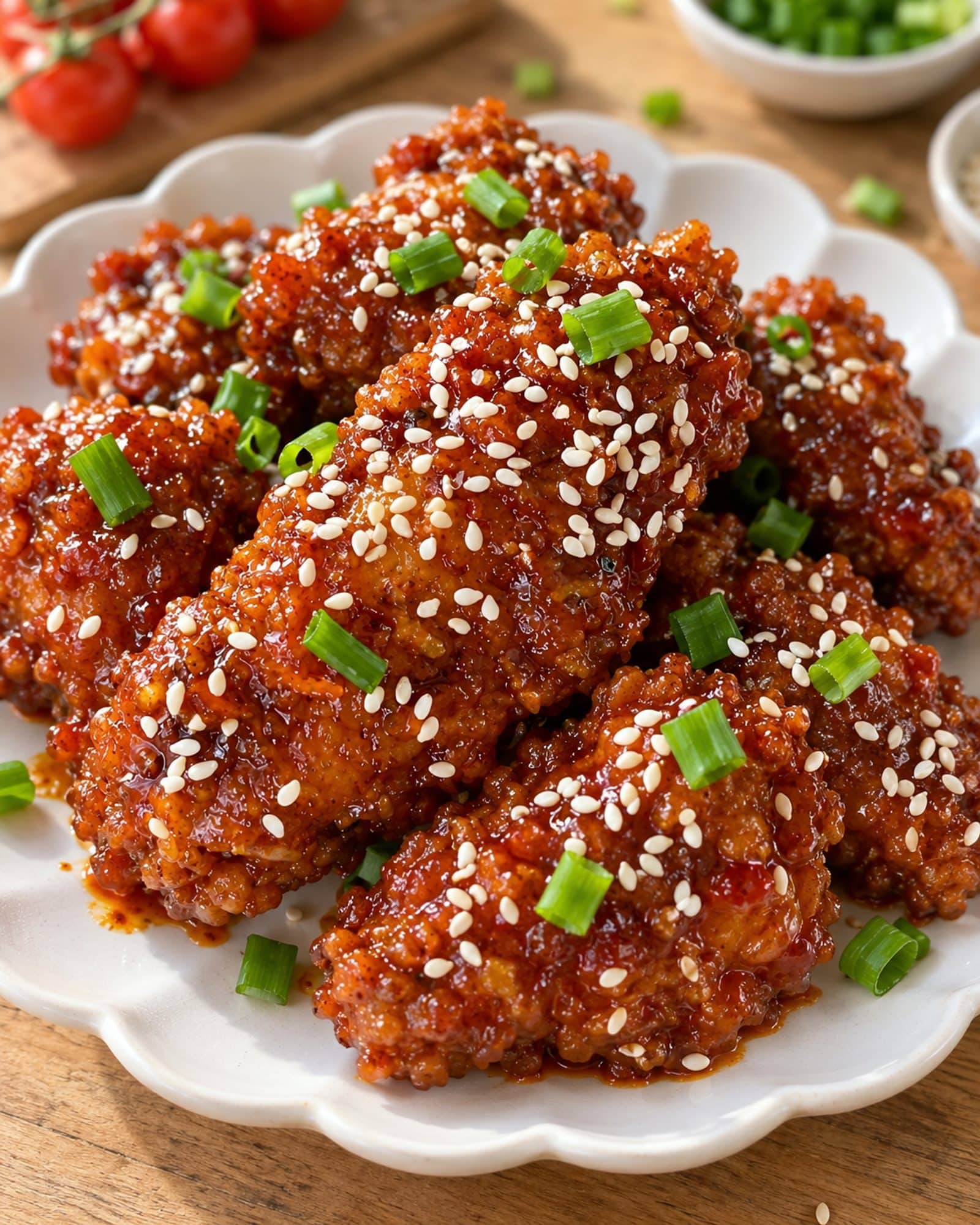
Alright, let’s get to the good part. This method takes about 45 minutes of active time, plus 30 minutes for marinating. Trust the steps, and you’ll be rewarded with the crispiest fried chicken of your life.
- Marinate the Chicken (30 minutes): In a large bowl, combine the salt, pepper, grated ginger, soy sauce, and rice wine. Add the chicken pieces and toss to coat. Cover and let it sit in the fridge for at least 30 minutes. This step seasons the meat and tenderizes it. Don’t skip it—it makes a difference.
- Make the Wet Batter: In a separate bowl, whisk together the cornstarch, all-purpose flour, baking powder, salt, and white pepper. Add the ice-cold water and the egg. Whisk until smooth. The batter should be thin, like heavy cream. If it’s too thick, add a tablespoon more water. Set it aside.
- Prepare the Glaze: In a small saucepan over medium heat, combine the gochujang, honey, soy sauce, rice vinegar, minced garlic, sesame oil, and water. Whisk until smooth. Bring it to a gentle simmer, then reduce the heat to low. Let it cook for 2-3 minutes, stirring occasionally, until it thickens slightly. Remove from heat and set aside.
- Heat the Oil: Fill your Dutch oven with about 2 inches of oil. Heat it over medium-high heat until it reaches 350°F (175°C). Use your thermometer to monitor it. While the oil heats, line a baking sheet with a wire rack.
- First Fry (Cook Through): Remove the chicken from the marinade. Shake off any excess liquid. Dip each piece into the wet batter, letting the excess drip off. Carefully lower the chicken into the hot oil using tongs. Don’t overcrowd the pot—work in batches of 5-6 pieces. Fry for 5-6 minutes, turning occasionally, until the chicken is golden and cooked through (internal temp of 165°F). The crust will be pale and soft—that’s normal. Transfer to the wire rack. Let it rest for 5 minutes. This rest is important; it allows the steam to escape.
- Second Fry (Get the Crunch): Increase the oil temperature to 375°F (190°C). Once the oil is hot, carefully add the first batch of chicken back in. Fry for another 3-4 minutes, until the crust is deep golden brown and shatteringly crispy. You’ll hear the difference—it sounds like crackling. Remove and drain on the wire rack.
- Glaze and Serve: While the chicken is still hot, toss it in the prepared gochujang glaze. Use a large bowl and gently toss until each piece is coated. Transfer to a serving platter. Sprinkle with toasted sesame seeds and sliced green onions. Serve immediately.
Sensory Cue: When you tap the fried chicken with a fork, it should sound hollow and crisp, not dull. If it sounds soft, it needs another minute in the oil.
Cooking Tips & Techniques
I’ve made every mistake in the book with fried chicken. I’ve had soggy crusts, burnt glaze, and undercooked meat. Here’s what I learned the hard way so you don’t have to.
- Keep the Batter Cold: The ice water in the batter isn’t optional. Cold batter hitting hot oil creates steam, which puffs up the crust and makes it light and crispy. If your batter warms up, pop it in the fridge for 10 minutes.
- Don’t Skip the Rest: After the first fry, let the chicken rest for 5 minutes. This allows the internal temperature to stabilize and the crust to set. If you go straight to the second fry, the crust might not get as crunchy.
- Oil Temperature is Everything: If the oil is too low, the chicken absorbs oil and gets greasy. If it’s too high, the outside burns before the inside cooks. Keep that thermometer handy. I’ve had to throw out entire batches because I got lazy.
- Work in Small Batches: Adding too many pieces at once drops the oil temperature dramatically. Fry in batches of 5-6 pieces. Give the oil time to come back up to temperature between batches.
- Glaze Right Before Serving: The glaze is sticky and delicious, but it can soften the crust if it sits too long. Toss the chicken in the glaze just before you’re ready to eat. If you’re making it for a party, keep the glaze and chicken separate and toss right before serving.
Personal Failure: I once tried to skip the double fry to save time. The result was a sad, pale, soggy mess. Never again. The double fry is non-negotiable for that restaurant-quality crunch.
Variations & Adaptations
This recipe is a great base, but you can tweak it to fit your mood or dietary needs. Here are a few ways I’ve played around with it:
- Spicy Honey Garlic: Add 2 extra cloves of minced garlic and 1 tablespoon of gochugaru (Korean chili flakes) to the glaze. It’s fiery and addictive.
- Soy Ginger Glaze: Swap the gochujang for 3 tablespoons of soy sauce, 2 tablespoons of brown sugar, and 1 tablespoon of grated ginger. It’s a more savory, less spicy version that’s just as delicious.
- Oven-Baked Version: For a lighter option, you can bake the chicken. After marinating, coat it in the batter, then place it on a greased wire rack over a baking sheet. Spray with oil and bake at 425°F (220°C) for 25-30 minutes, flipping halfway. It won’t be as crispy as the fried version, but it’s still pretty good.
- Air Fryer Adaptation: Preheat your air fryer to 400°F (200°C). Spray the battered chicken with oil and air fry for 12-15 minutes, shaking the basket halfway through. It’s quicker and less messy, but the crust is slightly less shattery.
- Gluten-Free: Use a gluten-free 1:1 flour blend in place of the all-purpose flour. The cornstarch is already gluten-free, so this swap works well.
I once made a batch with a miso-ginger glaze instead of gochujang, and it was a hit with friends who don’t love spicy food. The possibilities are endless.
Serving & Storage Suggestions
This Korean fried chicken is best served hot and fresh, right after glazing. The contrast between the hot, crunchy crust and the sticky, cool glaze is pure magic.
- Serving: Pile the glazed chicken on a large platter. Sprinkle generously with toasted sesame seeds and sliced green onions. I like to serve it with a side of pickled radish (danmuji) or a simple cucumber salad to cut through the richness. It also pairs beautifully with a cold beer or a glass of soju.
- Storage: If you have leftovers (unlikely, but possible), store the unglazed chicken separately from the glaze. Place the chicken in an airtight container in the fridge for up to 3 days. The glaze can be stored in a jar in the fridge for up to a week.
- Reheating: To bring back the crunch, reheat the chicken in an air fryer at 375°F (190°C) for 3-4 minutes, or in a 400°F (200°C) oven on a wire rack for 5-7 minutes. Avoid the microwave—it will turn the crust into a soggy, sad mess.
- Flavor Development: The flavors in the glaze actually deepen and meld together after a day in the fridge. If you’re making the glaze ahead of time, it will taste even better the next day.
Nutritional Information & Benefits
Let’s be real—this is fried chicken. It’s an indulgence, not a health food. But knowing what’s in it helps you enjoy it mindfully. Here’s a rough estimate per serving (about 4 pieces):
- Calories: ~450-550 kcal
- Protein: 30g
- Fat: 28g
- Carbohydrates: 25g
- Fiber: 1g
- Sugar: 12g
Health Benefits: The chicken provides high-quality protein for muscle repair. Gochujang, made from fermented chili peppers, contains capsaicin, which can boost metabolism and reduce inflammation. Garlic and ginger are both known for their immune-boosting properties. The sesame seeds add a dose of healthy fats and calcium.
Dietary Considerations: This recipe is dairy-free and nut-free. For a gluten-free version, use a gluten-free flour blend. For a lower-carb option, you can skip the glaze and season the chicken with salt and pepper after frying.
Personal Note: I don’t make this every week—it’s a treat. But when I do, I savor every single bite. It’s one of those meals that feels like a celebration, even on a random Tuesday.
Conclusion
This extra crispy Korean fried chicken with gochujang glaze is more than just a recipe. It’s a project that rewards you with the most satisfying crunch and a burst of sweet-spicy flavor. The double-fry method might seem like an extra step, but trust me—it’s the difference between good fried chicken and unforgettable fried chicken.
I love that this recipe feels special without being complicated. It’s the kind of dish that makes people think you spent hours in the kitchen, when really, you just followed a few smart steps. Whether you’re making it for a game day spread, a cozy dinner, or just because you deserve something amazing, this chicken delivers.
I’d love to hear how yours turns out! Did you try a different glaze? Did you go for the oven-baked version? Drop a comment below and share your experience. And if you loved it, don’t forget to pin this recipe for later. Happy frying!
Frequently Asked Questions
Can I use chicken breast instead of wings?
Yes, you can. Cut boneless, skinless chicken breasts into bite-sized pieces. The cooking time will be shorter—about 3-4 minutes for the first fry and 2-3 minutes for the second fry. Make sure the internal temperature reaches 165°F.
Why is my batter not sticking to the chicken?
This usually happens if the chicken is too wet after marinating. Shake off the excess marinade before dipping it in the batter. Also, make sure the batter is thick enough—if it’s too runny, it won’t cling.
Can I make the glaze ahead of time?
Absolutely! The glaze can be made up to a week in advance. Store it in an airtight jar in the fridge. Reheat it gently on the stove or in the microwave before tossing with the chicken.
How do I keep the chicken crispy after glazing?
Toss the chicken in the glaze right before serving. If you let it sit for more than 10 minutes, the moisture from the glaze will soften the crust. For parties, keep the chicken and glaze separate and toss just before guests arrive.
Can I use an air fryer instead of deep frying?
Yes, but the texture will be slightly different. Preheat the air fryer to 400°F (200°C), spray the battered chicken with oil, and cook for 12-15 minutes, shaking halfway. It’s less crispy than deep frying, but still delicious and much lighter.
Pin This Recipe!
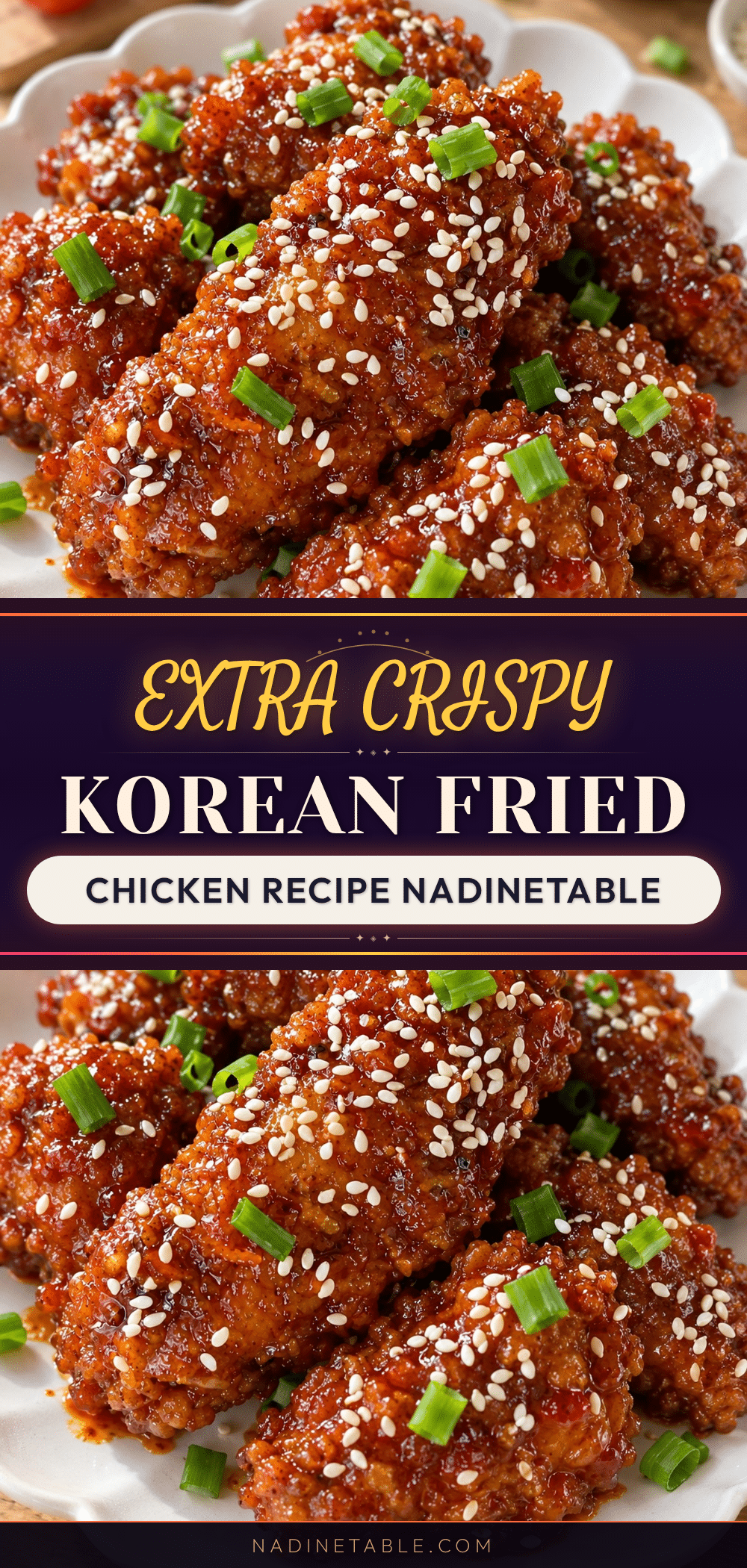
Extra Crispy Korean Fried Chicken with Gochujang Glaze Recipe
This extra crispy Korean fried chicken with gochujang glaze is a weekend project that pays you back in pure, crunchy, spicy joy. The double-fry method creates a shatteringly crisp crust, while the sweet-spicy glaze delivers bold, balanced flavor.
- Prep Time: 15 minutes
- Cook Time: 30 minutes
- Total Time: 45 minutes (plus 30 minutes marinating)
- Yield: 4 servings 1x
- Category: Main Course
- Cuisine: Korean
Ingredients
- 2 lbs chicken wings or drumettes (about 10–12 pieces)
- 1 teaspoon salt
- ½ teaspoon black pepper, freshly ground
- 1 tablespoon ginger, grated
- 2 tablespoons soy sauce, low-sodium
- 1 tablespoon rice wine (mirin)
- ½ cup cornstarch
- ¼ cup all-purpose flour
- 1 teaspoon baking powder
- ½ teaspoon salt
- ¼ teaspoon white pepper
- ½ cup ice-cold water
- 1 large egg
- 3 tablespoons gochujang (Korean chili paste)
- 2 tablespoons honey
- 1 tablespoon soy sauce
- 1 tablespoon rice vinegar
- 2 cloves garlic, minced
- 1 teaspoon sesame oil
- 1 tablespoon water
- Neutral oil for frying (about 4-5 cups, canola, vegetable, or peanut oil)
- Toasted sesame seeds for garnish
- Sliced green onions for garnish
Instructions
- Marinate the Chicken (30 minutes): In a large bowl, combine the salt, pepper, grated ginger, soy sauce, and rice wine. Add the chicken pieces and toss to coat. Cover and let it sit in the fridge for at least 30 minutes.
- Make the Wet Batter: In a separate bowl, whisk together the cornstarch, all-purpose flour, baking powder, salt, and white pepper. Add the ice-cold water and the egg. Whisk until smooth. The batter should be thin, like heavy cream. If it’s too thick, add a tablespoon more water. Set it aside.
- Prepare the Glaze: In a small saucepan over medium heat, combine the gochujang, honey, soy sauce, rice vinegar, minced garlic, sesame oil, and water. Whisk until smooth. Bring it to a gentle simmer, then reduce the heat to low. Let it cook for 2-3 minutes, stirring occasionally, until it thickens slightly. Remove from heat and set aside.
- Heat the Oil: Fill your Dutch oven with about 2 inches of oil. Heat it over medium-high heat until it reaches 350°F (175°C). Use your thermometer to monitor it. While the oil heats, line a baking sheet with a wire rack.
- First Fry (Cook Through): Remove the chicken from the marinade. Shake off any excess liquid. Dip each piece into the wet batter, letting the excess drip off. Carefully lower the chicken into the hot oil using tongs. Don’t overcrowd the pot—work in batches of 5-6 pieces. Fry for 5-6 minutes, turning occasionally, until the chicken is golden and cooked through (internal temp of 165°F). The crust will be pale and soft—that’s normal. Transfer to the wire rack. Let it rest for 5 minutes.
- Second Fry (Get the Crunch): Increase the oil temperature to 375°F (190°C). Once the oil is hot, carefully add the first batch of chicken back in. Fry for another 3-4 minutes, until the crust is deep golden brown and shatteringly crispy. Remove and drain on the wire rack.
- Glaze and Serve: While the chicken is still hot, toss it in the prepared gochujang glaze. Use a large bowl and gently toss until each piece is coated. Transfer to a serving platter. Sprinkle with toasted sesame seeds and sliced green onions. Serve immediately.
Notes
Keep the batter cold for maximum crispiness. Don’t skip the rest between the first and second fry. Oil temperature is crucial—use a thermometer. Work in small batches to maintain oil temperature. Glaze the chicken right before serving to keep the crust crispy. For gluten-free, use a gluten-free 1:1 flour blend.
Nutrition
- Serving Size: About 4 pieces
- Calories: 450550
- Sugar: 12
- Fat: 28
- Carbohydrates: 25
- Fiber: 1
- Protein: 30
Keywords: Korean fried chicken, gochujang glaze, crispy chicken, double fry, chicken wings, Korean recipe, spicy chicken