Love this? Save it for later!
Share the inspiration with your friends
“Hey, have you tried making bao buns at home? They’re way easier than you think,” my friend texted me one rainy evening. I was knee-deep in a chaotic day, juggling work emails and a toddler’s endless demands. Honestly, the idea of steaming fluffy buns stuffed with tender Korean chicken sounded like a dream I didn’t know I needed. I was skeptical—bao buns always seemed like a restaurant-only thing, right? But that night, I gave it a shot.
The smell of the sticky gochujang sauce simmering on the stove filled my tiny kitchen, mixing with the soft scent of steamed buns. It was a quiet moment amid the buzz of my busy life, a little culinary reset. From the first bite, the sweet and spicy sauce kissed the tender chicken, wrapped perfectly in pillowy bao bread. What surprised me most was how approachable this recipe was—no fancy equipment, just straightforward steps and simple ingredients.
Since then, I’ve made these flavorful Korean chicken bao buns countless times, perfecting the sticky gochujang sauce and tweaking the dough until it’s just right. They’ve become my go-to when I want to impress guests without stress or simply treat myself after a long day. It’s the kind of recipe that feels cozy and special all at once, the kind that lingers in your mind long after the last bite. I guess that’s why it stuck with me—comfort food with a playful twist, made easy enough for even the busiest cook.
Why You’ll Love This Recipe
Coming from someone who’s tried quite a few Asian-inspired dishes, this recipe stands out as a reliable crowd-pleaser. Here’s why it’s become a favorite in my kitchen:
- Quick & Easy: Everything comes together in under an hour, which is perfect for busy weeknights or spontaneous dinner parties.
- Simple Ingredients: No exotic shopping trips needed—most of what you need is probably already in your pantry or fridge.
- Perfect for Entertaining: Whether it’s a casual gathering or a cozy family meal, these bao buns always impress without the fuss.
- Crowd-Pleaser: Kids and adults alike go nuts for the sweet heat of the sticky gochujang sauce paired with tender chicken.
- Unbelievably Delicious: That combination of pillowy bao, savory chicken, and sticky-sweet-spicy sauce is just next-level comfort food.
What sets this apart from other bao recipes is the balance in the gochujang sauce—just enough heat to make you sit up without overwhelming the other flavors. Plus, the chicken stays juicy thanks to a quick marinate and careful cooking technique I picked up after a few trial runs. It’s not just any Korean chicken bao; it’s the kind you’ll find yourself craving on a lazy Saturday or when you want to impress without hours in the kitchen. Honestly, it’s the sort of dish that makes you close your eyes after the first bite and savor the moment.
What Ingredients You Will Need
This recipe uses straightforward, wholesome ingredients to bring out bold flavors and a satisfying texture without any complicated prep. Most are pantry staples, and substitutions are easy if you want to tweak things.
- For the Bao Buns:
- All-purpose flour – about 2 cups (240g)
- Active dry yeast – 2 teaspoons (for that perfect rise)
- Granulated sugar – 2 tablespoons (to feed the yeast and add a touch of sweetness)
- Warm water – 3/4 cup (180 ml), not too hot to avoid killing the yeast
- Vegetable oil – 2 tablespoons (keeps buns soft and tender)
- Baking powder – 1 teaspoon (helps the buns stay fluffy)
- Salt – 1/2 teaspoon
- For the Korean Chicken:
- Boneless, skinless chicken thighs – 1 pound (450g), chopped into bite-sized pieces (thighs stay juicy)
- Garlic – 3 cloves, minced (adds depth to the sauce)
- Ginger – 1 teaspoon, grated (fresh if possible)
- Soy sauce – 3 tablespoons (I reach for Kikkoman for consistent flavor)
- Rice vinegar – 1 tablespoon (balances the sweetness)
- Honey – 2 tablespoons (or brown sugar, for that sticky glaze)
- Gochujang (Korean chili paste) – 2 tablespoons (this is the star of the sauce—use a trusted brand like Chung Jung One)
- Sesame oil – 1 teaspoon (for that toasty finish)
- For Garnish and Assembly:
- Fresh cucumber slices – thinly sliced (adds crunch)
- Green onions – chopped (for a fresh bite)
- Pickled carrots or radish (optional, but totally worth it)
- Sesame seeds – toasted, for garnish
If you want a gluten-free option, almond flour can substitute part of the all-purpose flour, but the texture will be slightly different. For dairy-free needs, all the ingredients here are naturally free of dairy, so no worries. I like to keep gochujang on hand, but if you’re new to it, start with a little less and add more as you go.
Equipment Needed
You won’t need anything special beyond basic kitchen tools, which is one of the reasons I love this recipe. Here’s what you’ll want to have ready:
- Mixing bowls – for dough and marinade
- Measuring cups and spoons – precision matters here
- Whisk or fork – to mix ingredients
- Steamer basket or bamboo steamer – essential for that pillowy bao texture (I use a simple metal steamer that fits inside my pot)
- Heavy-bottomed skillet or wok – for cooking the chicken and sauce
- Rolling pin – to shape the buns (a clean wine bottle works in a pinch!)
- Parchment paper – cut into small squares to prevent sticking in the steamer
I’ve tried steaming bao buns in a microwave steamer, but the texture was off, so I recommend sticking with a stove-top steamer. If you don’t have a bamboo steamer, a metal one with a tight-fitting lid works just fine and is easier to clean. Keeping your steamer clean and dry between batches helps avoid soggy bottoms.
Preparation Method
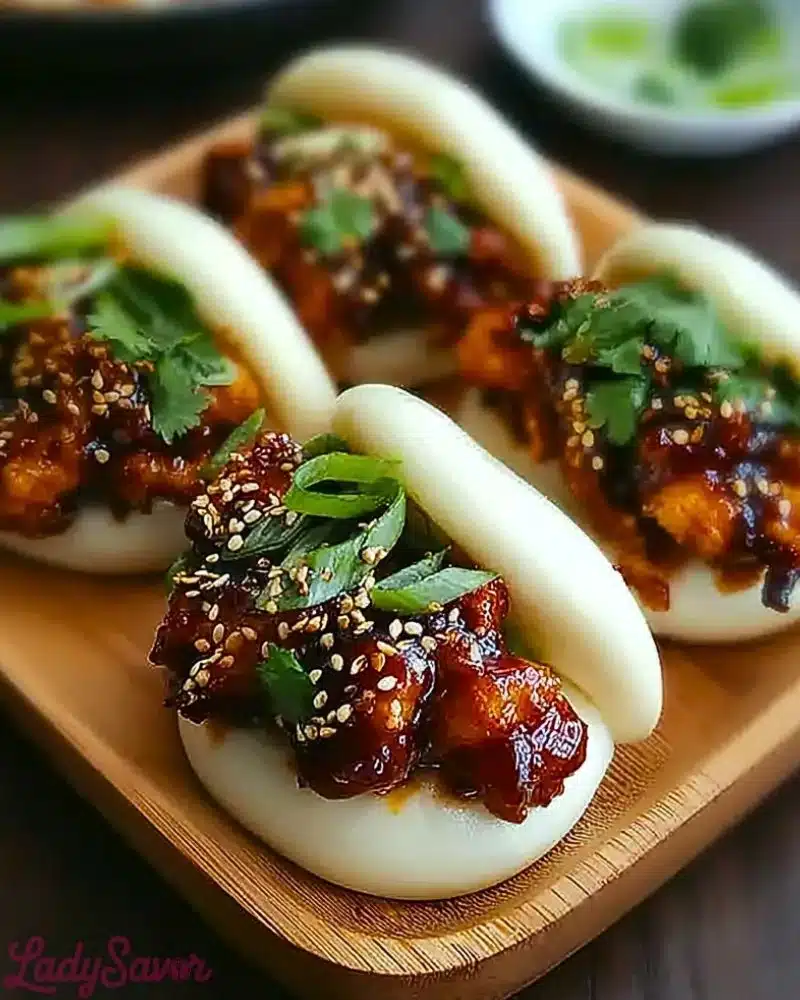
- Activate the Yeast: In a small bowl, combine warm water (about 110°F/43°C) with sugar and yeast. Stir lightly and let it sit for 5-10 minutes until frothy. This signals the yeast is alive and ready to work.
- Make the Dough: In a large bowl, whisk together flour, baking powder, and salt. Add the yeast mixture and vegetable oil. Stir to combine, then knead on a lightly floured surface for about 8-10 minutes until smooth and elastic. If the dough feels sticky, sprinkle a little more flour.
- Let It Rise: Place the dough in a greased bowl, cover with a damp cloth or plastic wrap, and let it rise in a warm spot for 1 to 1.5 hours, or until doubled in size. If your kitchen is chilly, the oven with just the light on works well.
- Prepare the Chicken Marinade: While the dough rises, mix together soy sauce, gochujang, honey, rice vinegar, garlic, ginger, and sesame oil in a bowl. Add the chopped chicken thighs and toss to coat. Let it marinate for at least 20 minutes (or up to an hour in the fridge).
- Shape the Bao Buns: Once the dough has risen, punch it down gently. Divide the dough into 10 equal pieces. Roll each piece into a ball, then flatten with a rolling pin into an oval about 4 inches (10 cm) wide. Brush lightly with oil, fold in half, and place on parchment squares.
- Steam the Buns: Arrange the buns in your steamer, leaving space between them. Steam over boiling water for 12-15 minutes until fluffy. Avoid lifting the lid during steaming to keep the buns from collapsing.
- Cook the Chicken: Heat a skillet over medium-high heat. Add the marinated chicken and cook, stirring occasionally, for about 8-10 minutes until fully cooked and caramelized in the sticky sauce. The sauce should thicken and cling to the chicken pieces nicely.
- Assemble the Bao Buns: Gently open each steamed bun and stuff with a generous spoonful of the sticky Korean chicken. Top with cucumber slices, green onions, pickled veggies if using, and a sprinkle of toasted sesame seeds.
- Serve Immediately: These bao buns are best enjoyed fresh and warm, with the perfect balance of soft bread and sticky, spicy chicken.
Pro tip: If your dough feels tough after kneading, it probably needs more resting time. Let it rest for 10-15 minutes and then shape again—it makes a big difference in softness. Also, keep an eye on the chicken while cooking; the sugars in the sauce can burn if the heat is too high.
Cooking Tips & Techniques
Making bao buns at home can seem intimidating, but a few tricks have made this recipe foolproof for me:
- Yeast Matters: Don’t rush the yeast activation. If your yeast doesn’t foam, it’s best to start fresh. That little bubble action is the secret to light buns.
- Gentle Kneading: Knead just enough to develop gluten. Too much and you’ll get dense buns; too little, and they won’t hold together well. I usually time myself to about 8 minutes.
- Steaming Technique: Keep the water boiling gently, not roaring. A steady steam is key to fluffy buns without soggy bottoms.
- Sticky Sauce Balance: The gochujang sauce can be tricky. Taste and adjust sweetness or tang by adding a little more honey or vinegar to suit your palate.
- Marinate Time: Don’t skip the chicken marinade. Even 20 minutes makes a difference, but if you have more time, let it sit up to an hour for deeper flavor.
In my first few tries, I overcooked the chicken, making it dry, or steamed the buns too long so they got a bit gummy—both easy mistakes. Now, I multitask by steaming buns while cooking the chicken, so everything comes together hot and fresh. This is one recipe where timing and attention really pay off.
Variations & Adaptations
This recipe is versatile enough to suit different tastes and dietary needs. Here are some variations I’ve experimented with:
- Vegetarian Version: Swap the chicken for marinated tofu or mushrooms. Pan-fry with the same gochujang sauce for a deliciously meaty texture without the meat.
- Spicy Level: If you’re not a fan of heat, reduce the gochujang by half and add a bit more honey. For extra kick, sprinkle sliced fresh chilies on top.
- Healthier Buns: Use whole wheat flour or a blend with all-purpose for a nuttier flavor and added fiber. The buns won’t be as fluffy but still tasty.
- Alternative Cooking: Try baking the buns instead of steaming for a slightly different texture—brush with oil and bake at 375°F (190°C) for about 15 minutes until golden.
Personally, I once swapped pickled carrots for quick-pickled daikon radish and added a drizzle of sriracha mayo for a creamy contrast. It was a hit at a casual get-together, paired nicely with a side of quick crispy Asian shrimp stir fry I still make often.
Serving & Storage Suggestions
These Korean chicken bao buns are best served fresh and warm to savor their soft texture and sticky sauce. I like to plate them with extra cucumber slices and a sprinkle of sesame seeds for a bit of crunch and visual appeal.
Pair them with a light Asian slaw or steamed greens for a balanced meal. For drinks, a cold jasmine tea or a crisp lager complements the spicy-sweet flavors beautifully.
If you have leftovers, store the buns and chicken separately in airtight containers in the refrigerator for up to 2 days. Reheat the buns by steaming them again for 3-4 minutes or microwaving with a damp paper towel to keep them moist. Warm the chicken gently on the stovetop or microwave until heated through.
Flavors actually deepen after a day, so if you can, make the chicken a day ahead for an even more intense taste. Just be sure to steam fresh buns to keep that signature fluffy softness.
Nutritional Information & Benefits
Each serving of these flavorful Korean chicken bao buns offers a balanced mix of protein, carbs, and fats. The chicken thighs provide juicy protein and iron, while the bao buns deliver satisfying carbohydrates for energy.
Gochujang adds a spicy kick without excess calories and contains fermented ingredients which may aid digestion. Using minimal oil keeps this recipe lighter than many restaurant versions.
This dish is naturally dairy-free and can be made gluten-free with flour substitutions. Just be mindful of soy sauce brands if avoiding gluten.
From a wellness viewpoint, I appreciate how this recipe blends comfort with nutrition, making it a satisfying meal that doesn’t leave you feeling weighed down.
Conclusion
Flavorful Korean chicken bao buns with sticky gochujang sauce have earned a permanent spot in my recipe collection for good reason. They’re approachable, fun to make, and deliver big tastes without hours in the kitchen. Whether you make them for a casual weeknight or a special occasion, these buns bring a little joy and spice to the table.
Feel free to tweak the spice level, try different garnishes, or even pair them with a sweet treat like Amish oatmeal rhubarb bars to round out your meal. I love how this recipe invites creativity while still being reliable and comforting—a rare combination.
Give it a try and share how you make it your own. I’d love to hear your twists and stories in the comments below. Here’s to cozy kitchens and flavorful bites.
FAQs
- Can I use chicken breast instead of thighs? Yes, but chicken breast can dry out quickly. Cook it gently and watch the timing closely to keep it tender.
- Is there a substitute for gochujang? You can mix miso paste with a bit of chili paste or sriracha, honey, and soy sauce to mimic gochujang, but the flavor won’t be quite the same.
- How do I store leftover bao buns? Keep buns separate from the filling in airtight containers in the fridge for up to 2 days. Reheat buns by steaming or microwaving with a damp towel.
- Can I freeze the bao buns? Absolutely! Freeze steamed buns on a baking sheet, then transfer to a freezer bag. Steam or microwave from frozen when ready to eat.
- What side dishes pair well with these bao buns? Asian-style slaws, steamed veggies, or even bang bang salmon bowls complement the flavors nicely.
Pin This Recipe!
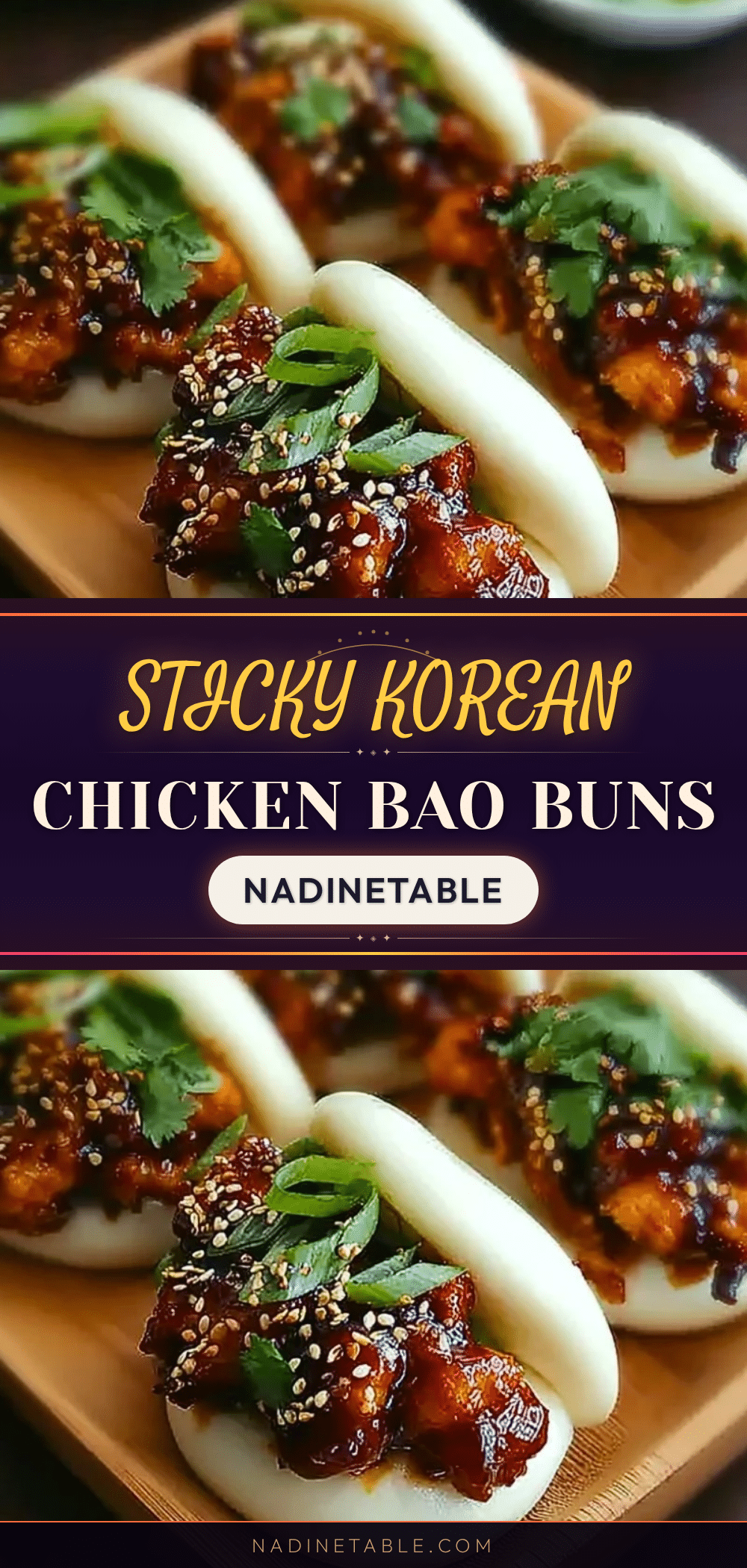
Flavorful Korean Chicken Bao Buns Recipe with Sticky Gochujang Sauce Easy and Perfect
This recipe features soft, pillowy bao buns filled with tender Korean chicken coated in a sticky, sweet-spicy gochujang sauce. It’s an approachable, quick, and delicious dish perfect for busy weeknights or entertaining.
- Prep Time: 20 minutes
- Cook Time: 30 minutes
- Total Time: 50 minutes
- Yield: 10 bao buns
- Category: Main Course
- Cuisine: Korean
Ingredients
- All-purpose flour – about 2 cups (240g)
- Active dry yeast – 2 teaspoons
- Granulated sugar – 2 tablespoons
- Warm water – 3/4 cup (180 ml)
- Vegetable oil – 2 tablespoons
- Baking powder – 1 teaspoon
- Salt – 1/2 teaspoon
- Boneless, skinless chicken thighs – 1 pound (450g), chopped into bite-sized pieces
- Garlic – 3 cloves, minced
- Ginger – 1 teaspoon, grated
- Soy sauce – 3 tablespoons
- Rice vinegar – 1 tablespoon
- Honey – 2 tablespoons
- Gochujang (Korean chili paste) – 2 tablespoons
- Sesame oil – 1 teaspoon
- Fresh cucumber slices – thinly sliced
- Green onions – chopped
- Pickled carrots or radish (optional)
- Sesame seeds – toasted, for garnish
Instructions
- Activate the yeast by combining warm water (about 110°F/43°C) with sugar and yeast in a small bowl. Stir lightly and let sit for 5-10 minutes until frothy.
- Make the dough by whisking together flour, baking powder, and salt in a large bowl. Add the yeast mixture and vegetable oil. Stir to combine, then knead on a lightly floured surface for 8-10 minutes until smooth and elastic. Add more flour if sticky.
- Place the dough in a greased bowl, cover with a damp cloth or plastic wrap, and let rise in a warm spot for 1 to 1.5 hours until doubled in size.
- Prepare the chicken marinade by mixing soy sauce, gochujang, honey, rice vinegar, garlic, ginger, and sesame oil in a bowl. Add chopped chicken thighs and toss to coat. Marinate for at least 20 minutes or up to an hour in the fridge.
- Punch down the risen dough and divide into 10 equal pieces. Roll each into a ball, flatten into a 4-inch oval, brush lightly with oil, fold in half, and place on parchment squares.
- Steam the buns over boiling water for 12-15 minutes until fluffy, avoiding lifting the lid during steaming.
- Heat a skillet over medium-high heat. Cook the marinated chicken, stirring occasionally, for 8-10 minutes until fully cooked and sauce thickens.
- Assemble the bao buns by opening each steamed bun and stuffing with chicken. Top with cucumber slices, green onions, pickled veggies if using, and toasted sesame seeds.
- Serve immediately while buns are fresh and warm.
Notes
If dough feels tough after kneading, let it rest 10-15 minutes before shaping again for softer buns. Keep water boiling gently during steaming to avoid soggy bottoms. Watch chicken carefully to prevent burning the sugars in the sauce. For gluten-free option, substitute part of the flour with almond flour but texture will differ. Use less gochujang if sensitive to heat and adjust sweetness or tang with honey or vinegar.
Nutrition
- Serving Size: 1 bao bun
- Calories: 220
- Sugar: 6
- Sodium: 550
- Fat: 7
- Saturated Fat: 1
- Carbohydrates: 28
- Fiber: 1
- Protein: 14
Keywords: Korean chicken bao buns, gochujang sauce, steamed buns, Asian recipe, easy dinner, sticky chicken, homemade bao